Raj challenges apology demand
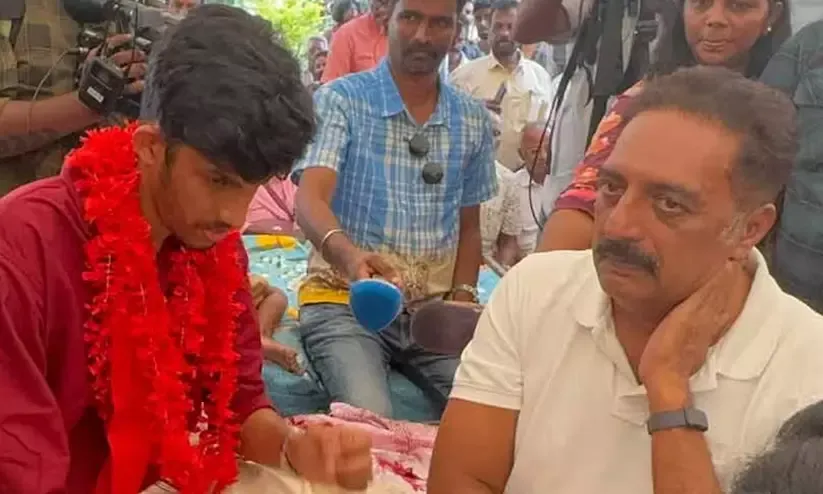
Raj visited the protest venue outside the university on November 7, 2026, the sixth day of the hunger strike, according to Onmanorama. He called on Bindu to help settle the dispute and questioned why the minister responsible for higher education was taking the administration's side.
He opposed the university's demand for apologies and peace bonds, arguing that students seeking basic facilities and defending their rights should not have to apologize for protesting. They were not "Savarkars," he said.
Onmanorama also reported that Raj described the issue as "dictatorship," rejecting the characterization of it as "saffronisation." He challenged the university's argument in court that the students did not have sufficient attendance, pointing out that their suspension had prevented them from attending classes.
Raj was in Kochi for the "Jantar Mantar @ Kochi" program alongside Cockroach Janta Party leader Abhijeet Dipke. The event belongs to a broader campaign backing protests in defense of democracy and voting rights.
Campus demands and disciplinary action
The dispute grew out of an August 2026 strike organized by the Students' Federation of India (SFI). Its 18-point charter raised concerns about inadequate campus infrastructure, water shortages and unfilled faculty positions, according to The New Indian Express. Students' stated demands also include the vice-chancellor's regular presence on campus and the release of pending certificates.
During a university syndicate meeting on August 13, students performed a street play featuring a mock funeral. The administration viewed the performance as a symbolic funeral for Vice-Chancellor Ciza Thomas.
The university suspended 16 students on September 1, accusing them of manhandling Thomas and attempting to damage university property. Four SFI activists were arrested in connection with the incident, The South First reported. The suspended group includes six PhD scholars, seven postgraduate students and three undergraduates, according to Onmanorama.
Conditional return for 12 students
At its November 3 meeting, the syndicate agreed to lift the suspensions of 12 students if they submitted written apologies, pledged not to take part in violent protests and appeared in person with a parent or guardian. The students rejected the apology requirement and began a hunger strike.
Four others—Shyamjith, Shraddha, Abhijith K V and Archana—remained suspended. Their suspensions were extended for another two months pending an investigation into allegations that they had entered campus while disciplinary action was still in effect, The New Indian Express reported.
Examination access before the courts
The suspensions have also left students fighting for permission to take their semester examinations. A single judge of the Kerala High Court granted interim permission on October 30, but a Division Bench comprising Justices Anil K Narendran and Muralee Krishna S overturned that order on November 3. As a result, ten undergraduate and postgraduate students missed their first examination on November 4.
In reaching its decision, the Division Bench relied on the 2017 judgment in Dr Antony Thomas v VM Muhammed Rafique. That judgment states that "political activities like dharna, hunger strikes and other practices like Satyagraha have no place in a constitutional democracy, much less in academic institutions" and says participating students could face expulsion or rustication.
On November 5, the Supreme Court declined urgent intervention and directed the High Court's single bench to reconsider the students' plea concerning examination access. It urged a prompt decision on their writ petition challenging the suspensions and noted the university's undertaking to hold a special examination for those affected if the High Court cancels their suspensions.
The matter is expected to return to the High Court on Monday.